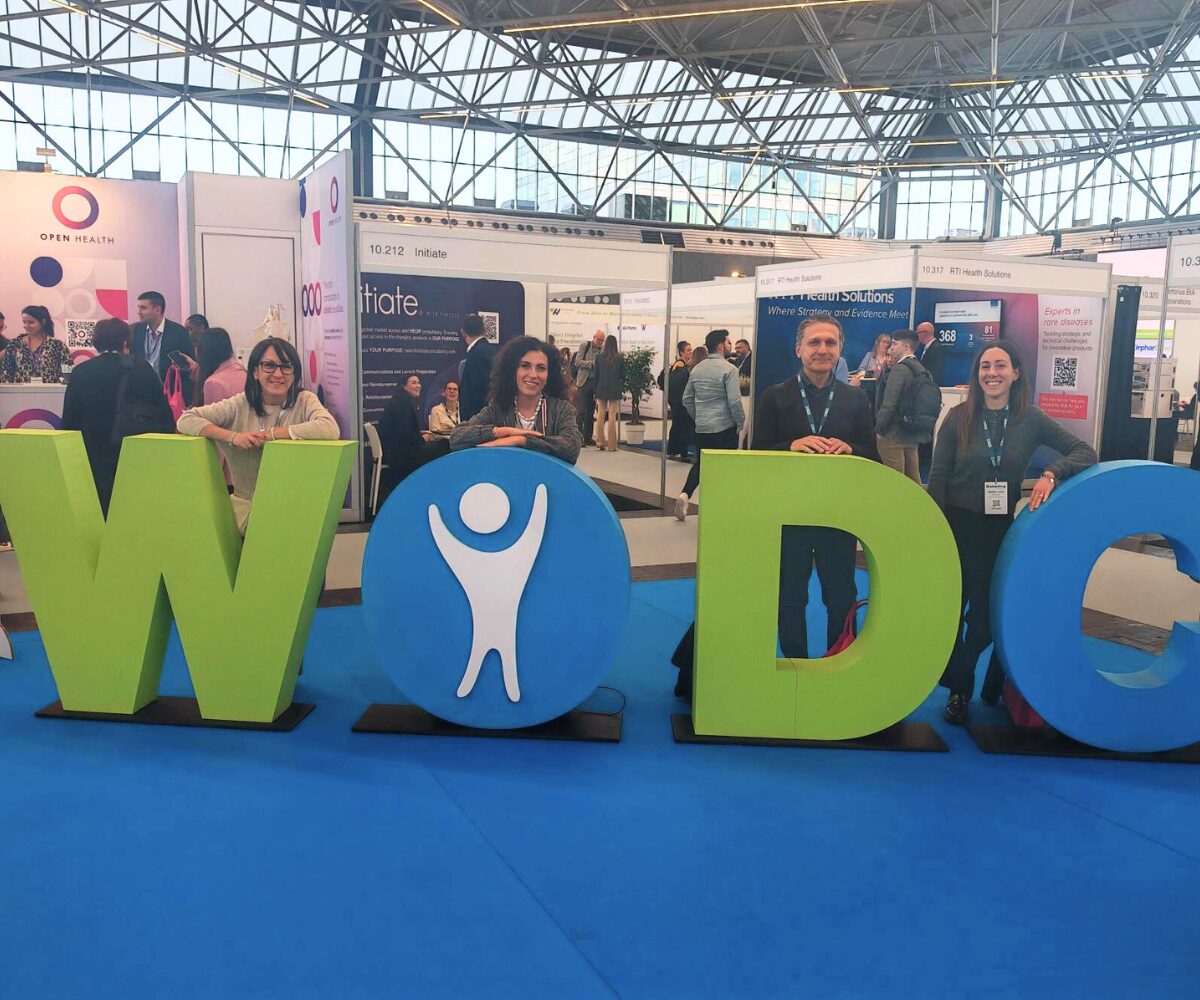
Fondazione Gianni Benzi took part in the World Orphan Drug Congress 2025, which once again gathered institutions, industry, researchers, regulators and patient organisations to address key challenges in the field of rare diseases.
Viviana Giannuzzi, Head of the Research and Innovation Department, contributed to the programme with several interventions focused on regulatory aspects and research methodologies.
During the congress, Viviana joined the Working Group “Competition of regulatory ecosystems in approving medicines: policy implications in the case of Europe”, sharing the Foundation’s perspective on how differences between regulatory systems may influence the development and approval pathways for orphan medicines. The panel discussion also involved Pedro Franco, Head of Europe Regulatory and Scientific Policy at Merck, and Violeta Stoyanova-Beninska, Senior Scientific Specialist at Human Division at EMA, providing a broad and insightful overview of the European landscape. Viviana also delivered a presentation on innovative research methodologies qualified by the EMA for rare diseases, highlighting how innovative methods and tools can support drug development in settings characterised by small populations and limited data.
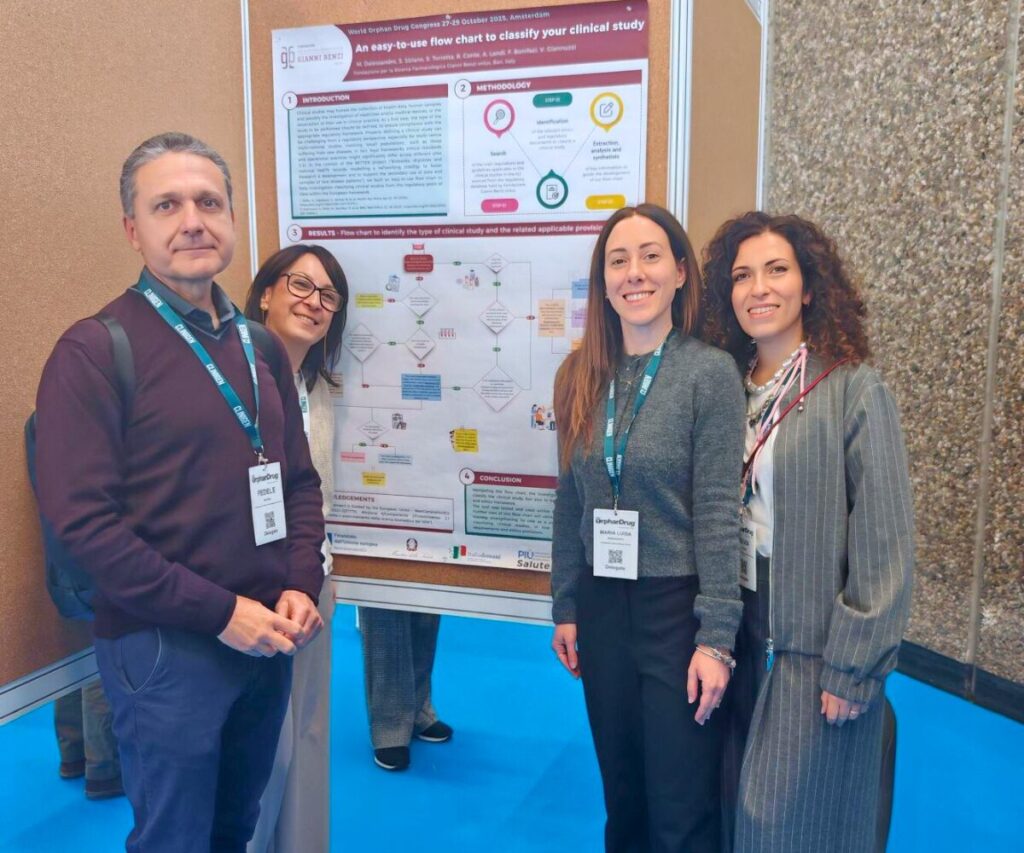
As part of the congress, the poster “An easy-to-use flow chart to classify your clinical study” was presented by Maria Luisa Dalessandro. Developed within the BETTER project funded by the National Recovery and Resilience Plan (PNRR), this collaborative work has designed and offered a practical tool to help researchers and clinicians properly classifying clinical studies from the regulatory point of view within the European framework.
Fondazione Gianni Benzi’s participation in WODC 2025 reaffirms its continuous commitment to networking to promote quality, rigour and innovation in rare disease research, and to contributing to the European dialogue on regulatory issues that directly impact patients’ lives.