

The European Medicines Agency (EMA) has opened a public consultation to guide the generation and assessment of meaningful proof-of-concept data for the development of medicinal products in paediatric oncology.
The availability of adequate proof-of-concept data is required prior to the initiation of paediatric clinical trials. Recently, non-clinical proof-of-concept data are becoming central to justify the initiation of clinical development in paediatric oncology.
Indeed, the EMA Paediatric Committee has observed an increasing number of Paediatric Investigation Plans (PIPs) in oncology that rely on a medicine’s mechanism of action, rather than its adult indication, due to biological and clinical differences between paediatric and adult cancers. This is also confirmed in a recent study we conducted within the TEDDY network and published in September 2025 (see figure below), which shows an increase in the percentage of non-adult-driven indications in the EU after 2018, along with the number of PIPs approved to develop paediatric- only indications.
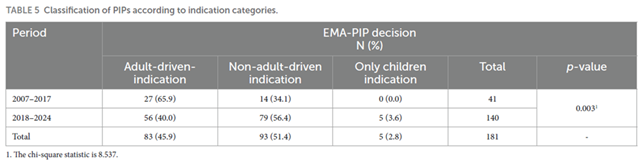
Source: Reggiardo et al., (2025) Front. Med. 12:1642279. doi: 10.3389/fmed.2025.1642279
It is expected further increase with the upcoming new European Pharmaceutical legislation, as one of the proposed measures is the obligation to develop paediatric medicines based on their mechanism of action.
However, given the absence of a structured regulatory framework for non-clinical proof-of-concept studies and the expressed interest from academic stakeholders in developing such a framework, the EMA has drafted a reflection paper outlining key elements considered important for guiding these assessments and associated development activities in paediatric oncology.
The consultation is open for comments until 30 June 2026. Follow this link to provide your input: Development of anti-cancer medicinal products in paediatric patients – Scientific guideline | European Medicines Agency (EMA)