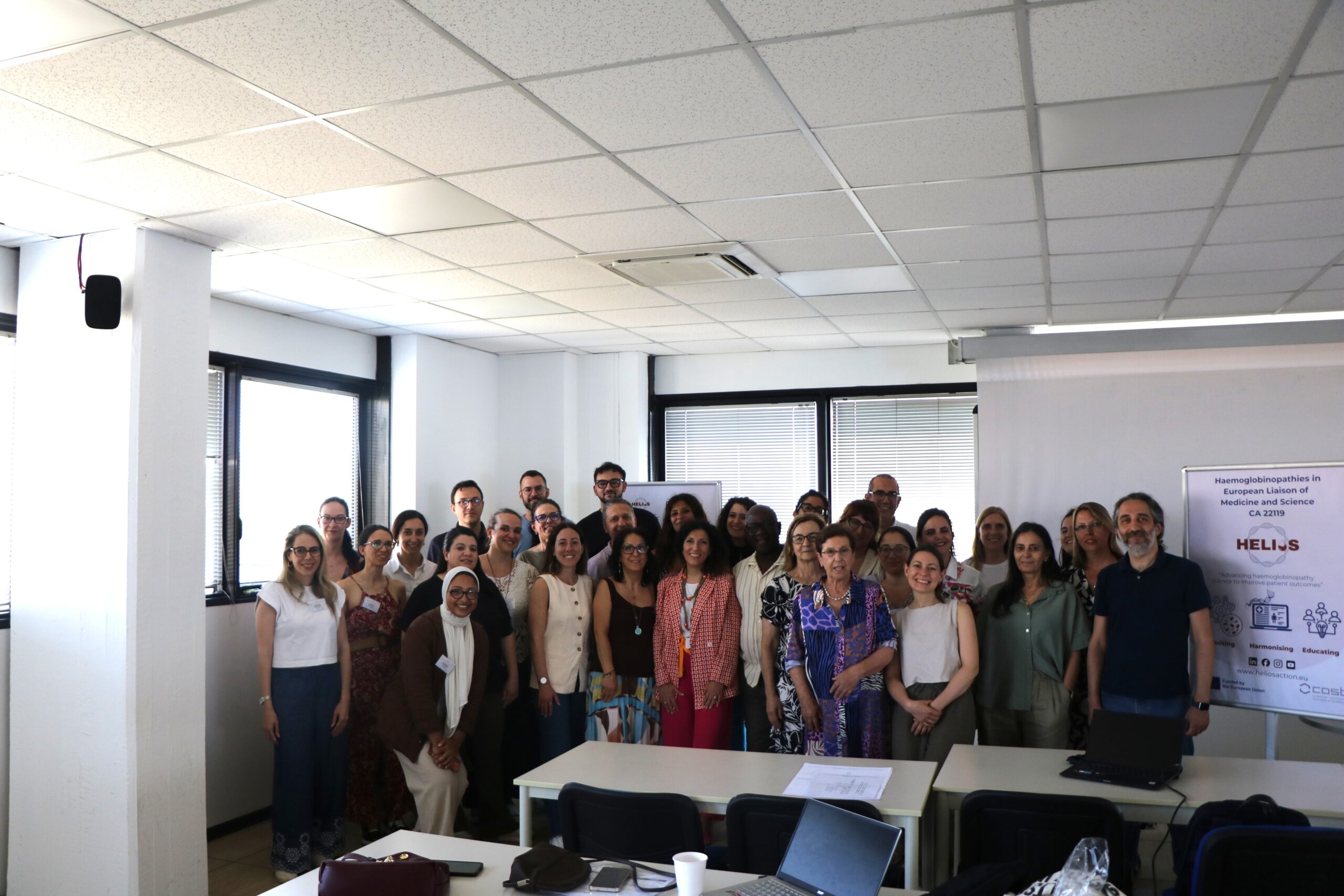
From 1 to 3 July 2026, the Department of Computer Science at the University of Bari Aldo Moro hosted the 18th edition of the Foresight Training Course run by Fondazione per la Ricerca Farmacologica Gianni Benzi – ETS, as part of HELIOS, the COST Action dedicated to research on haemoglobinopathies.
Three days dedicated to a question that is becoming ever more central to research on haemoglobinopathies: how can health and genetic data be used responsibly, inclusively and with respect for people’s rights?
The Training School, “Ethics, Gender, Regulation and Use of Data”, brought together international participants and experts from different backgrounds, creating a space for discussion across research, clinical practice, ethics and regulation. Lectures, round tables and group activities explored topics including data protection, the European Health Data Space (EHDS), informed consent, gender equality, genetic research, and the ethical and regulatory implications of artificial intelligence.
What it actually meant to take part in the Training School is also captured in the testimonials published on the HELIOS blog.
Adela Perolla, from Children’s Hospital Zagreb, recalls arriving in Bari expecting to attend a course and leaving instead “with a list of questions I had never asked myself”. Among the reflections she took away is one on informed consent: “a consent document can be legally flawless and humanly unreadable. And if it is unreadable, what I have collected is not consent: it is a signature” – a particularly delicate issue when research involves children and adolescents.
Adela also looks at data sharing, essential to rare disease research, from a different angle. “Share more’ is not an ethical position: it is a slogan”, Adela writes. The point, then, is not simply to collect and share more data, but to question the ways it is done, the safeguards in place, and the control that remains with the people the data belongs to. Adela also offers a very direct reflection on sex and gender in research: “A study that ignores half the population is not just less fair. It is less true”.
Milana Trucl’s account, from Sciensano – the Belgian Institute of Public Health – brings out another central aspect of the experience: the chance to test principles and rules against the everyday problems of research. Having come to Bari to speak about the European Health Data Space, Milana describes how discussions with clinicians, geneticists, researchers, computer scientists and ethicists made the reflection on regulation far more concrete. The aim, she writes, was to understand “not just what the rules or principles say, but what they mean for people actually carrying out research and working with patients and their data”.
It is precisely these differences – in discipline, country and professional background – that turned the three days in Bari into an opportunity to ask how research can be designed to bring together scientific innovation, the protection of rights and inclusion.
The Training School ended, then, not only with new knowledge but also with new questions to carry into future projects. Because ethics, inclusion and the responsible use of data are not matters to be addressed at the end of a study, but elements to be considered from its very design.
The full testimonials from Adela Perolla and Milana Trucl are available on the HELIOS blog, while the Training School speakers’ presentations are available on the HELIOS Zenodo platform.