
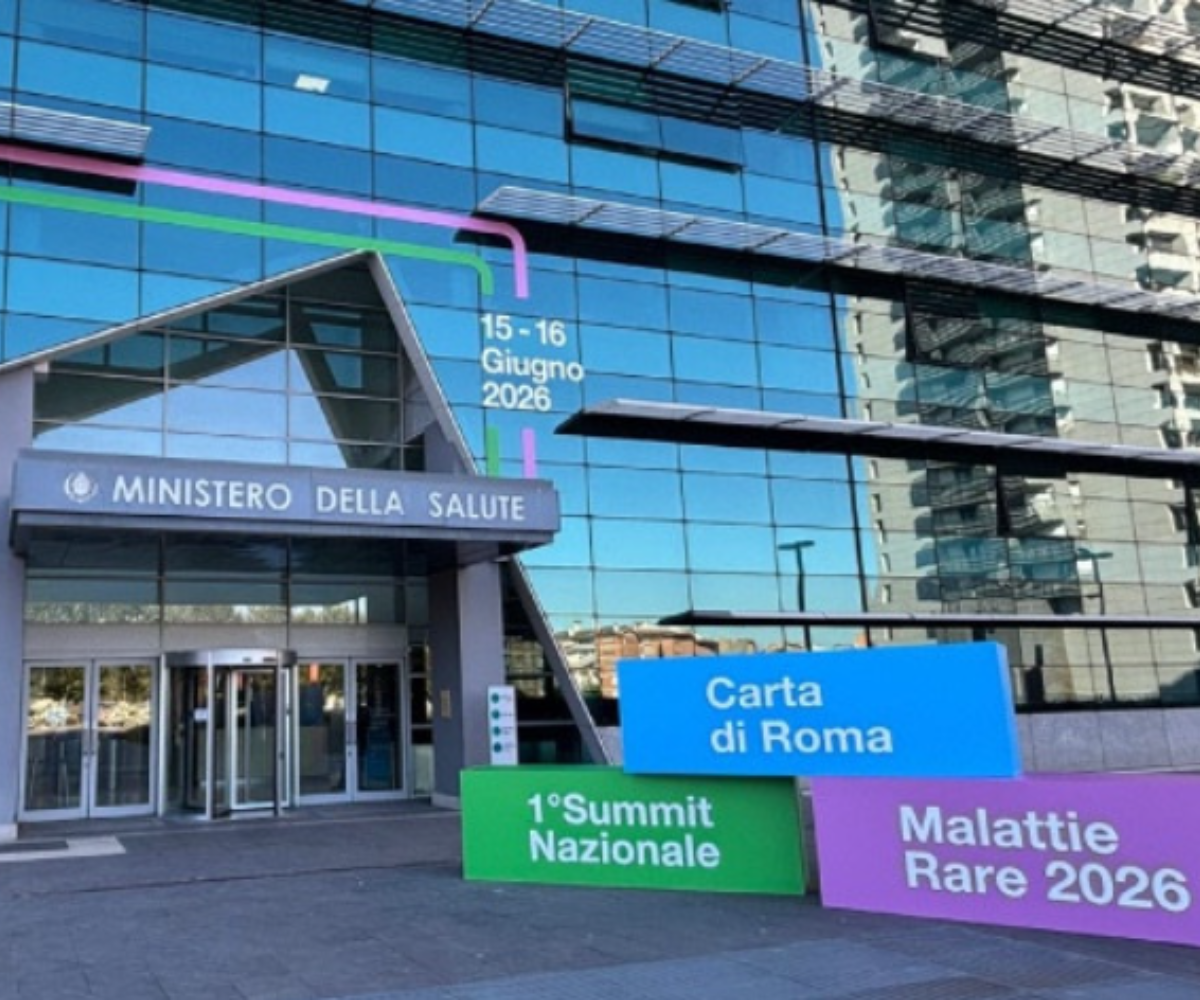
The first National Summit on Rare Disease Policies took place in Rome on 15-16 June 2026, promoted by Italy’s Ministry of Health on the initiative of Undersecretary Marcello Gemmato. The event brought together public institutions, and the scientific and medical community to discuss how to strengthen governance, diagnosis, research, treatment and patient care for rare diseases, with the aim of ensuring integrated models of care across the whole lifespan.
The summit’s central output, the Carta di Roma, was developed with contributions from more than 90 experts across institutions, patient associations, scientific societies, research bodies and the pharmaceutical industry. The document sets out a strategic roadmap addressing key gaps in the current system, proposing a national coordinating body for centres linked to the European Reference Networks (ERNs), more consistent diagnostic pathways, streamlined clinical research, and more uniform access to treatment. It is accompanied by a companion paper, “Proposte per l’Europa”, which the Ministry intends to bring to European institutions to reinforce Italy’s voice in shaping EU-level rare disease policy.
At the summit, Avril Daly, President of EURORDIS, turned to the regulatory landscape, arguing that the European Health Data Space could resolve much of the data fragmentation issue, giving researchers access to interoperable datasets and registries to speed diagnosis and regulatory decisions. She welcomed the Biotech Act as recognition of rare diseases’ central role in innovation, as 75% of advanced therapies hold an orphan designation, but warned that such initiatives remain sectoral, calling instead for a comprehensive EU action plan, with a European Blueprint for Rare Diseases, shaped by over 200 stakeholders, now in development and led by EURORDIS.
Annalisa Scopinaro, President of UNIAMO, called for Italy to move beyond exemption codes – which currently cover only around 4,500 of the roughly 8,000 known rare diseases and serve purposes distinct from patient monitoring and health planning – towards a national registry based on Orphacodes, modelled on the French system. She noted that France has already tracked over one million rare disease patients through this approach, enabling epidemiological analysis, care-pathway monitoring and improved health planning, and stressed that without reliable data on who and where patients are, services cannot be matched to real needs.
Stefano Benvenuti, Head of Public Affairs at Fondazione Telethon, addressed a related structural challenge: around 80% of rare diseases together affect fewer than 1% of patients, making standard investment models unviable for developers. With therapy development typically costing around €100 million, he called for a shift towards public-private collaboration, European-level coordination, and technology platforms capable of grouping diseases by shared mechanisms to achieve a more sustainable path to treatment.
Discover more here.